
Laser hair removal is no longer an exclusive luxury—it has become the preferred method for those seeking smooth, hair-free skin over the long term. However, not all bodies react the same way. There is a key factor that determines whether a session will be successful or ineffective: your skin phototype.
Here’s how your skin tone influences the treatment and which technology is best suited for you.
The importance of phototype: why your skin sets the rules
The effectiveness of laser hair removal lies in melanin. This pigment is found in both the hair and the skin, and it is the laser’s target.
The laser emits light that is absorbed by the melanin in the hair, converting into heat and destroying the follicle. The challenge arises when the skin also contains a high amount of melanin: the laser may not be able to distinguish between the hair and the surrounding skin tissue. That’s why it’s important to consult professionals to determine whether your skin is suitable for laser treatment.
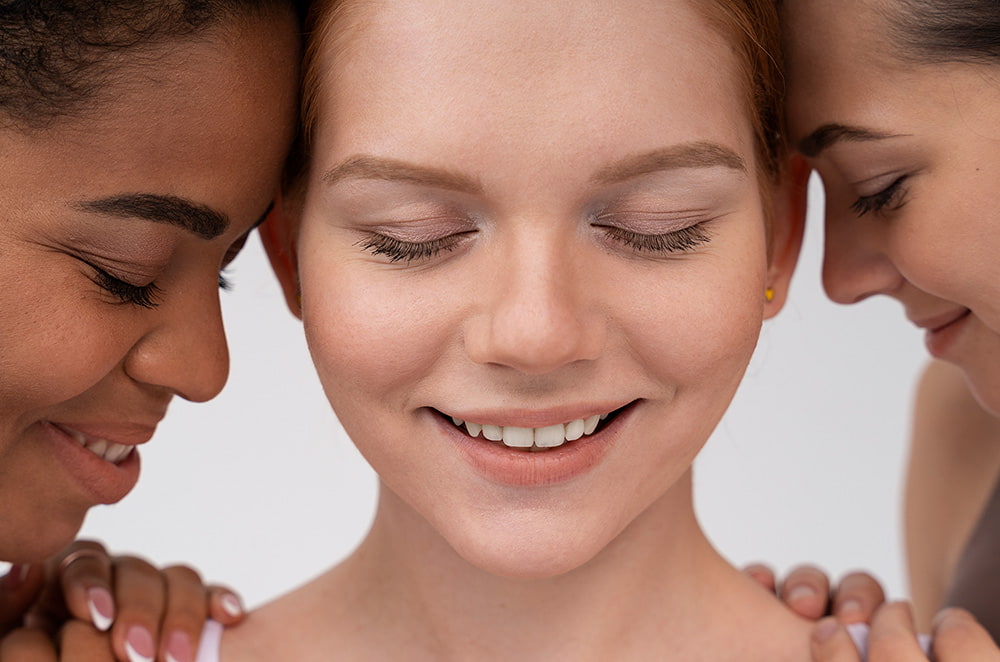
Skin types and the ideal laser for each
Depending on your skin tone and hair color, the laser parameters must be adjusted accordingly. Below is the classification of skin types according to the Fitzpatrick scale, which defines the different existing tones.
Phototype I:
- Very fair skin (often with freckles)
- Always burns, never tans
- Light eyes, blonde or red hair
Phototype II:
- Fair skin
- Burns easily, tans minimally
- Light or intermediate eyes
Phototype III:
- Intermediate skin (beige or slightly tanned)
- Sometimes burns, gradually tans
Phototype IV:
- Light brown skin (typical in Mediterranean regions)
- Rarely burns, tans easily
Phototype V:
- Dark brown skin
- Very rarely burns
Phototype VI:
- Very dark or black skin
- Never burns
To determine your skin type, it’s important to look at areas of the body that are not constantly exposed to the sun.
Is diode laser suitable for all skin types?
There is a common myth that diode laser only works for fair skin. In reality, thanks to technological advances, it is now the most versatile system.
At Laser Factory, with our equipment, we can treat up to Phototype IV. Even so, an initial assessment is always necessary to fully understand each skin’s characteristics and determine whether the treatment can be performed and with which parameters.
In short, it’s important to note that treatment cannot be performed on very dark skin, and in very fair skin (with blonde or red hair), results will be limited since the laser targets the melanin in the hair.
Factors that can temporarily alter your skin type
It’s essential to understand that genetics is not the only determining factor in treatment success. Other conditions must also be considered:
- Recent tanning: Sun exposure activates superficial melanin. If you’ve been in the sun, your skin “acts” like a higher phototype than it actually is, increasing the risk of pigmentation spots.
- Hormonal changes: Pregnancy or thyroid issues can cause hyperpigmentation in specific areas, which requires adjusting the laser’s power.
- Photosensitizing medications: Some medications make your skin react more strongly to light, regardless of your tone. It’s important to always inform your specialist about any medication you are taking.
Don’t look for perfect skin—choose the technology your body needs
Therefore, the success of laser hair removal doesn’t depend on having “perfect skin,” but on using the right technology. Before starting, make sure you place yourself in the hands of professionals who prioritize a prior dermatological assessment. Understanding your phototype is not just a technical step—it’s the guarantee that you’ll achieve the results you’re looking for without putting your skin’s health at risk.
If you have any questions about the effects of laser hair removal or would like us to address other concerns, don’t hesitate to contact us. You can also check out our article on how to prepare before starting a laser hair removal treatment.